
Disc injuries are among the most common and challenging conditions affecting the spine, often leading to debilitating pain that disrupts daily activities, work performance, and overall quality of life. If you’ve recently experienced sharp back pain, radiating leg discomfort, or persistent numbness after lifting something heavy or even just bending awkwardly, you may be dealing with a disc problem. At Northstar Integrated Health & Physical Medicine Center in Lisle, IL, we understand how frightening and frustrating these injuries can be. The good news is that chiropractic care offers a conservative, non-surgical approach that has helped countless patients find relief and return to the activities they love. This comprehensive guide will walk you through everything you need to know about disc injuries and how specialized chiropractic techniques can support your recovery.
What is a disc injury? A disc injury occurs when one of the cushioning structures between your vertebrae becomes damaged, bulged, herniated, or degenerated. These intervertebral discs act as shock absorbers for your spine, and when compromised, they can cause pain, nerve irritation, and reduced mobility.
Table of Contents
- Understanding Disc Injuries: What Happens to Your Spine
- Common Causes and Risk Factors
- Signs and Symptoms to Watch For
- How Chiropractic Care Helps Disc Injuries
- Specific Chiropractic Techniques for Disc Problems
- Key Benefits of Chiropractic Treatment
- Treatment Approaches Comparison
- Practical Tips for Managing Disc Health
- When to See a Chiropractor
- Myths vs. Facts About Disc Injuries
- Final Thoughts
Understanding Disc Injuries: What Happens to Your Spine
Your spine contains 23 intervertebral discs that serve as cushions between each vertebra. These discs have a tough outer layer called the annulus fibrosus and a gel-like center called the nucleus pulposus. When functioning properly, they allow your spine to bend, twist, and absorb impact during movement.
A disc injury occurs when this structure becomes compromised. The most common types include disc bulges, herniations, protrusions, and degenerative disc disease. A bulging disc happens when the outer layer weakens and allows the inner material to push outward, while a herniated disc involves an actual tear in the outer layer with the inner gel leaking out.
What makes disc injuries particularly problematic is their proximity to spinal nerves. When disc material presses against these nerves, it can cause radiating pain, tingling, numbness, or weakness in the arms or legs. This is why someone with a lumbar disc herniation might feel pain shooting down their leg, a condition commonly known as sciatica.
Here in Lisle, we see patients with disc injuries from all walks of life. Some are athletes who pushed too hard during training, while others are office workers who spent years sitting with poor posture. The spine doesn’t discriminate, and disc problems can develop gradually over time or suddenly from acute trauma.
Common Causes and Risk Factors
Understanding what leads to disc injuries helps in both prevention and treatment. While some factors are beyond your control, many are influenced by lifestyle choices and daily habits.
Age-related degeneration is perhaps the most common contributor. As we age, our discs naturally lose water content and become less flexible. This process, called disc degeneration, makes the discs more susceptible to tears and herniation even from minor stresses.
Repetitive stress and poor body mechanics play significant roles. Repeatedly lifting heavy objects with improper form, especially while twisting, places enormous pressure on the discs. Many patients at Northstar Integrated Health & Physical Medicine Center discover their disc problems developed after years of work-related activities performed with poor posture or technique.
Sudden trauma from car accidents, falls, or sports injuries can cause immediate disc damage. The force from impact can tear the disc’s outer layer or cause the nucleus to push through suddenly. Even seemingly minor accidents can result in significant disc injuries that may not manifest symptoms immediately.
Excess body weight increases mechanical stress on the spine, particularly the lower back discs that bear the most weight. Research indicates that maintaining a healthy weight reduces disc pressure and lowers the risk of herniation.
Sedentary lifestyle weakens the supporting muscles around the spine, leaving discs vulnerable to injury. Conversely, high-impact activities without proper conditioning can also overload the discs. The key is finding balance through appropriate movement and strengthening exercises.
Smoking decreases oxygen supply to disc tissue, accelerating degeneration. Studies have shown that smokers experience disc problems at higher rates than non-smokers and may experience slower healing when injuries occur.
Signs and Symptoms to Watch For
Recognizing the signs of a disc injury early can lead to more effective treatment outcomes. Symptoms vary depending on the location and severity of the injury.
For lumbar disc injuries affecting the lower back, the most common complaint is localized back pain that may range from a dull ache to sharp, stabbing sensations. Pain often worsens with sitting, bending forward, coughing, or sneezing. Many patients experience sciatica, characterized by pain radiating down one or both legs, often accompanied by tingling, numbness, or weakness in the leg or foot.
Cervical disc injuries in the neck present differently. Pain may radiate into the shoulders, arms, or hands. Patients often describe electric shock-like sensations, numbness in the fingers, or difficulty with fine motor tasks like buttoning shirts. Neck stiffness and headaches frequently accompany cervical disc problems.
Muscle weakness is a significant warning sign. When nerve compression is severe, the affected muscles may struggle to function properly. You might notice difficulty lifting your foot (foot drop) with lumbar disc injuries or trouble gripping objects with cervical disc problems.
Changes in reflexes can indicate nerve involvement. During examinations at our Lisle practice, we test reflexes to determine the level and severity of nerve compression, which guides treatment planning.
Some patients experience bladder or bowel changes, which require immediate medical attention as they may indicate cauda equina syndrome, a serious condition requiring emergency care. While rare, recognizing these red flag symptoms is crucial.
How Chiropractic Care Helps Disc Injuries
Chiropractic care for disc injuries focuses on reducing nerve irritation, improving spinal alignment, decreasing inflammation, and promoting natural healing. Unlike surgical interventions, chiropractic offers a conservative, non-invasive approach that addresses both symptoms and underlying biomechanical problems.
The primary goal is to reduce pressure on the affected disc and surrounding nerves. Through careful assessment and targeted techniques, chiropractors can help restore proper spinal mechanics, which allows the disc to heal in a more favorable environment.
Spinal adjustments are performed with precision and care when disc injuries are present. Contrary to common concerns, chiropractors modify their approach based on the specific disc condition. Gentle, specific adjustments can help restore joint mobility in areas that have become restricted due to injury, while avoiding excessive force to the damaged disc itself.
Decompression techniques create negative pressure within the disc, which can help retract herniated material and improve nutrient exchange. This promotes healing by drawing in water, oxygen, and nutrients while removing inflammatory waste products.
Research published in the Journal of Manipulative and Physiological Therapeutics has shown that chiropractic care can provide significant pain relief and functional improvement for patients with disc herniations. Evidence indicates that many patients who receive conservative chiropractic care avoid surgery and experience lasting improvement.
At Northstar Integrated Health & Physical Medicine Center, we’ve witnessed remarkable recoveries from patients who arrived fearful they’d need surgery. While not every disc injury responds to conservative care alone, many do, making chiropractic an excellent first-line treatment option.
Specific Chiropractic Techniques for Disc Problems
Not all chiropractic techniques are appropriate for every disc injury. Skilled chiropractors select specific methods based on the type, location, and severity of the disc problem, as well as the patient’s overall health and comfort level.
Flexion-Distraction Technique is one of the most common and well-researched approaches for disc injuries. This gentle, non-thrusting method uses a specialized table that stretches and decompresses the spine in a rhythmic pumping motion. The technique creates negative intradiscal pressure, helping to pull herniated disc material away from nerves while improving circulation. Patients find this technique comfortable, and it’s particularly effective for lumbar disc herniations with sciatica.
Cox Technique is a specific type of flexion-distraction that follows a precise protocol. It involves gentle, repetitive movements that increase intervertebral disc height and reduce nerve root pressure. Studies suggest this technique can help reduce the size of disc herniations over time.
Pelvic Blocking uses cushioned wedges placed under the pelvis to allow gravity to assist in reducing disc herniation. This passive technique is extremely gentle and often used for patients who cannot tolerate more direct approaches.
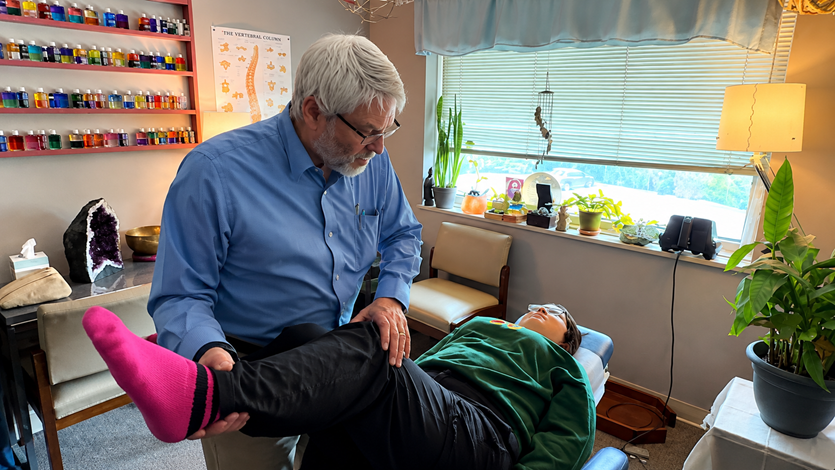
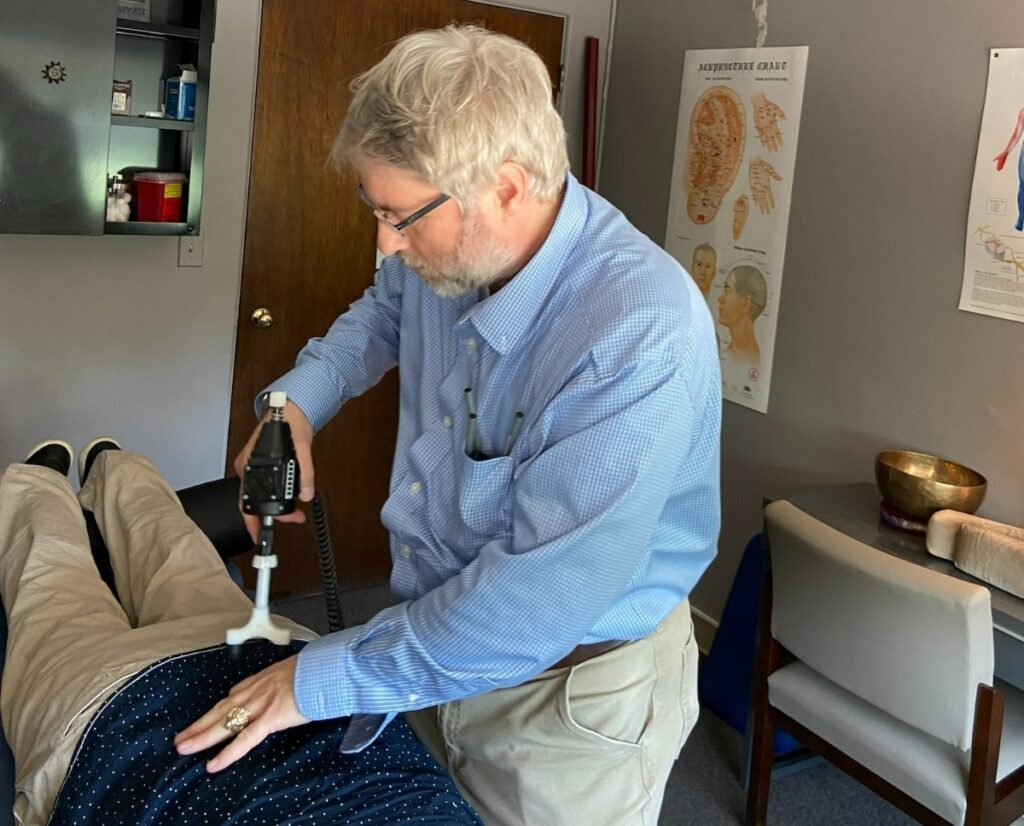
Instrument-Assisted Adjustments deliver controlled, low-force impulses to specific spinal segments. Tools like the Activator or ArthroStim allow for precise adjustments without the rotation or “cracking” that some patients find uncomfortable. This approach is especially useful for acute disc injuries where traditional manual adjustments might be too aggressive.
Spinal Decompression Therapy uses computerized traction devices to gently stretch the spine. The intermittent pulling and relaxing creates a vacuum effect within the disc, promoting retraction of herniated material and improving healing. Treatment protocols typically involve multiple sessions over several weeks.
Side-Posture Adjustments are modified techniques performed with the patient lying on their side. These are carefully applied to restore motion to restricted spinal segments while protecting the injured disc from excessive force.
Here in Lisle, our approach at Northstar Integrated Health & Physical Medicine Center involves thorough assessment before selecting techniques. We might combine multiple methods or adjust our approach as healing progresses, always prioritizing patient comfort and safety.
Key Benefits of Chiropractic Treatment
Choosing chiropractic care for disc injuries offers numerous advantages that extend beyond simple pain relief. Understanding these benefits helps patients make informed decisions about their treatment approach.
Non-surgical intervention is perhaps the most significant benefit. Surgery carries risks, requires recovery time, and doesn’t guarantee success. Research from the American College of Physicians recommends conservative care, including spinal manipulation, as a first-line treatment for low back pain. Chiropractic allows patients to explore effective options before considering invasive procedures.
Drug-free pain management addresses the growing concern about opioid dependence. Chiropractic care provides pain relief through mechanical and neurological mechanisms rather than masking symptoms with medication. This approach eliminates the risk of medication side effects and dependency.
Improved function and mobility occur as nerve pressure decreases and spinal mechanics normalize. Patients often report being able to return to activities they thought were lost forever. Whether it’s playing with grandchildren, returning to golf, or simply bending to tie shoes without pain, functional improvements significantly enhance quality of life.
Faster recovery times are often observed when chiropractic care begins early in the injury process. Evidence indicates that early intervention with conservative care can prevent chronic pain development and reduce the likelihood of long-term disability.
Reduced inflammation occurs through multiple mechanisms. Adjustments have been shown to reduce inflammatory markers in the body. Improved spinal mechanics decrease ongoing tissue irritation, allowing natural anti-inflammatory processes to work more effectively.
Prevention of future injuries happens as chiropractors address biomechanical dysfunction and provide education about proper movement patterns. Patients learn how to protect their spine during daily activities, reducing the risk of re-injury or new disc problems.
Whole-person approach considers lifestyle factors contributing to disc health. Chiropractors provide guidance on ergonomics, exercise, nutrition, and stress management, creating a comprehensive wellness strategy rather than just treating symptoms.
Treatment Approaches Comparison
| Treatment Approach | How It Works | Recovery Timeline | Invasiveness |
|---|---|---|---|
| Chiropractic Care | Restores spinal alignment, decompresses discs, reduces nerve pressure through manual techniques | 4-12 weeks with progressive improvement | Non-invasive, no downtime required |
| Physical Therapy | Strengthens supporting muscles, improves flexibility and movement patterns | 6-12 weeks of active rehabilitation | Non-invasive, requires active participation |
| Medication | Reduces pain and inflammation through pharmaceutical intervention | Temporary relief during use | Non-invasive but has systemic side effects |
| Epidural Injections | Delivers anti-inflammatory medication directly to affected nerve area | Relief may last weeks to months | Minimally invasive procedure with needle insertion |
| Surgery | Removes herniated disc material or fuses vertebrae to stabilize spine | 3-6 months full recovery, immediate restrictions | Highly invasive with surgical risks and recovery period |
Practical Tips for Managing Disc Health
Supporting your disc health through daily habits can accelerate recovery and prevent future problems. These practical strategies complement professional chiropractic care and empower you to take an active role in your spinal wellness.
Master proper lifting technique to protect your discs during everyday activities. Always bend at your knees rather than your waist, keep objects close to your body, avoid twisting while lifting, and engage your core muscles. If something is too heavy, ask for help or use a dolly. Many disc injuries happen during seemingly simple tasks like lifting grocery bags or picking up children.
Optimize your sleeping position because you spend roughly a third of your life in bed. For back sleepers, place a pillow under your knees to reduce lumbar disc pressure. Side sleepers should use a pillow between the knees to keep the spine aligned. Stomach sleeping generally increases disc stress and should be avoided when possible. Your mattress should provide adequate support without being too firm or too soft.
Practice good sitting ergonomics especially if you work at a desk. Your chair should support your lower back’s natural curve. Keep your feet flat on the floor with knees at hip level. Position your computer monitor at eye level to avoid neck strain. Stand up and move every 30-45 minutes to prevent disc compression from prolonged sitting. Many of our patients in Lisle have office jobs, and we’ve seen remarkable improvement when they implement these simple ergonomic changes.
Stay hydrated because your discs are approximately 80% water. Adequate hydration helps maintain disc height and shock-absorbing capacity. Aim for half your body weight in ounces of water daily. Disc hydration naturally decreases throughout the day as gravity compresses the spine, which is why you’re actually taller in the morning than evening.
Maintain a healthy weight to reduce mechanical stress on your spinal discs. Research shows that excess weight, particularly around the midsection, shifts your center of gravity forward and increases lumbar disc pressure. Even modest weight loss can significantly decrease disc load and pain levels.
Incorporate core strengthening exercises once acute pain subsides. A strong core provides muscular support that takes pressure off the discs. Focus on exercises that strengthen deep stabilizing muscles rather than just superficial abs. Your chiropractor can recommend appropriate exercises based on your specific condition.
Apply ice or heat appropriately for home management. During acute flare-ups, ice reduces inflammation for the first 48-72 hours. Apply for 15-20 minutes several times daily. After the acute phase, heat can relax muscles and improve circulation. Never apply heat or ice directly to skin.
Avoid prolonged sitting whenever possible. Sitting increases intradiscal pressure by approximately 40% compared to standing. If your work requires extended sitting, use a standing desk for part of the day or take frequent movement breaks.
When to See a Chiropractor
Knowing when to seek professional chiropractic care can make the difference between a minor episode and a chronic condition. Understanding the appropriate timing helps ensure optimal outcomes.
Seek care early if you experience back or neck pain lasting more than a few days. While minor aches from overdoing yard work might resolve on their own, persistent pain often indicates underlying dysfunction that benefits from professional evaluation. Early intervention frequently prevents acute problems from becoming chronic.
Watch for radiating symptoms as a key indicator. If pain, tingling, numbness, or weakness extends into your arms or legs, this suggests nerve involvement that should be assessed promptly. These symptoms indicate the disc problem is affecting neural structures.
Notice changes in severity that prompt immediate evaluation. If pain progressively worsens despite rest or home care, or if you experience sudden onset of severe pain, professional assessment is warranted. Gradual worsening may indicate progressive disc damage.
Consider previous episodes as motivation for evaluation. If you’ve had recurring back or neck problems, seeking care during pain-free periods can address underlying issues before the next flare-up occurs. Preventive care is often more effective than waiting for crisis management.
Red flag symptoms require immediate medical attention, though they are rare. These include loss of bladder or bowel control, progressive leg weakness, saddle anesthesia (numbness in the groin area), or pain accompanied by fever and unexplained weight loss. While these don’t necessarily indicate disc problems, they require urgent evaluation to rule out serious conditions.
At Northstar Integrated Health & Physical Medicine Center in Lisle, we perform comprehensive examinations including orthopedic testing, neurological assessment, and postural analysis. We may recommend imaging studies if indicated. Our goal is to determine whether chiropractic care is appropriate for your condition or if you need referral to another specialist.
Duration matters when deciding to seek care. Acute disc injuries may cause severe pain initially but often respond well to conservative treatment. Chronic disc problems that have persisted for months or years may require longer treatment protocols but can still benefit significantly from chiropractic intervention.
Myths vs. Facts About Disc Injuries
Myth: Once a Disc Herniates, You’ll Always Have Problems
Fact: Many disc herniations heal naturally over time, especially with appropriate conservative care. Research shows that herniated disc material can be reabsorbed by the body through a process called phagocytosis. While some herniations may cause recurring symptoms, many patients achieve complete resolution and return to normal activities without long-term limitations.
Myth: Chiropractic Adjustments Will Make a Herniated Disc Worse
Fact: When performed by trained professionals using appropriate techniques, chiropractic care is safe and effective for disc injuries. Chiropractors are extensively trained to recognize when adjustments should be modified or avoided. Evidence indicates that specific chiropractic techniques for disc problems have high success rates and low complication risks when applied correctly.
Myth: Bed Rest is the Best Treatment for Disc Injuries
Fact: Prolonged bed rest can actually delay recovery and lead to muscle weakness. Current guidelines recommend staying as active as tolerable within pain limits. Movement promotes nutrient exchange in the discs and prevents muscle deconditioning. Brief rest during acute flare-ups is acceptable, but extended inactivity is counterproductive.
Myth: Disc Injuries Always Require Surgery
Fact: The vast majority of disc injuries respond to conservative care and never require surgery. Studies suggest that approximately 90% of disc herniation patients improve with non-surgical treatment. Surgery is typically reserved for cases with progressive neurological deficits or when conservative care has been exhausted without adequate improvement.
Myth: If You Have a Bulging Disc, You’ll Always Have Pain
Fact: Many people have disc bulges visible on MRI scans yet experience no symptoms whatsoever. Research has shown that disc abnormalities are common in pain-free individuals. The presence of a bulge doesn’t automatically mean pain, and pain doesn’t always correlate with the size of the bulge. Symptoms depend on whether the disc is pressing on nerves and the body’s inflammatory response.
Final Thoughts
Disc injuries can feel overwhelming, but they don’t have to define your life or limit your future. Understanding how these injuries develop, recognizing symptoms early, and seeking appropriate conservative care can make all the difference in your recovery journey. Chiropractic treatment offers a safe, effective, non-surgical approach that addresses both the immediate pain and the underlying biomechanical issues contributing to disc problems.
Here at Northstar Integrated Health & Physical Medicine Center in Lisle, Illinois, we’ve helped countless patients overcome disc injuries and return to active, fulfilling lives. Our integrated approach combines specific chiropractic techniques with education and lifestyle recommendations tailored to each individual’s needs. We understand that no two disc injuries are exactly alike, which is why we customize care plans based on thorough examination findings and your personal recovery goals.
If you’re experiencing back pain, neck discomfort, or radiating symptoms that might indicate a disc problem, we encourage you to reach out for an evaluation. Early intervention often leads to faster recovery and better long-term outcomes. Remember, choosing conservative care first doesn’t mean you’re avoiding necessary treatment—it means you’re giving your body the best opportunity to heal naturally with professional guidance and support.
Your spine carries you through life, and taking care of it through proper movement, good habits, and professional care when needed is an investment in your long-term health and vitality. We’re here to support you every step of the way.
Frequently Asked Questions
How long does it take to recover from a disc injury with chiropractic care?
Recovery timelines vary based on injury severity, your overall health, and how quickly you begin treatment. Many patients notice improvement within 2-4 weeks, with significant progress by 6-8 weeks. Chronic disc problems may require longer treatment protocols of 3-6 months. Your chiropractor will provide realistic expectations based on your specific examination findings and response to initial care.
Can chiropractic care help with degenerative disc disease?
Yes, chiropractic care can help manage degenerative disc disease by maintaining spinal mobility, reducing pain, and slowing progression. While degeneration cannot be reversed, proper spinal mechanics and regular care can minimize symptoms and maintain function. Many patients with degenerative changes lead active, comfortable lives with appropriate chiropractic management and lifestyle modifications.
Is it safe to see a chiropractor if I have a herniated disc?
When you see a qualified chiropractor who performs proper examination and uses appropriate techniques, chiropractic care for herniated discs is safe and often highly effective. Chiropractors are trained to recognize which techniques are suitable for different disc conditions and will modify approaches based on your specific situation. If your condition requires medical referral, your chiropractor will recognize this during the evaluation.
Will I need X-rays or MRI before starting chiropractic treatment?
Not always. Many disc injuries can be effectively assessed through clinical examination including orthopedic tests, neurological evaluation, and movement analysis. Your chiropractor may recommend imaging if there are red flags, traumatic injury, progressive neurological symptoms, or if you’re not responding to initial care as expected. Advanced imaging helps confirm diagnosis and rule out serious pathology when clinically indicated.
Can I continue exercising with a disc injury?
Modified activity is typically recommended rather than complete cessation of exercise. Avoid high-impact activities, heavy lifting, and movements that increase pain during acute phases. Low-impact activities like walking or swimming often help recovery by promoting circulation without excessive disc stress. Your chiropractor can provide specific exercise recommendations that support healing while maintaining fitness during your recovery period.
What’s the difference between a bulging disc and a herniated disc?
A bulging disc occurs when the disc’s outer layer weakens and allows the entire disc to extend beyond its normal boundaries, like a hamburger too big for its bun. A herniated disc involves a tear in the outer layer with inner material leaking out, similar to jelly squeezing out of a donut. Herniations typically cause more severe symptoms because the leaked material often irritates nearby nerves. Both conditions can benefit from conservative chiropractic care.
TL;DR – Key Takeaways
- Disc injuries occur when the cushioning structures between vertebrae become damaged, bulged, herniated, or degenerated, often causing pain and nerve irritation
- Chiropractic care offers effective, non-surgical treatment for disc problems using specialized techniques like flexion-distraction, spinal decompression, and gentle adjustments tailored to your specific condition
- Most disc injuries respond well to conservative care—approximately 90% of patients improve without needing surgery when receiving appropriate treatment
- Early intervention with chiropractic care leads to better outcomes, faster recovery, and reduced risk of chronic pain development
- Supporting your recovery through proper lifting technique, ergonomic adjustments, core strengthening, and lifestyle modifications enhances treatment effectiveness and prevents future disc problems