


Most of us have heard it before — “sit up straight,” “stop slouching,” “hold your head up.” But proper posture is about so much more than following an old piece of advice from a parent or teacher. Your posture is a direct reflection of your spinal health, your muscle balance, and how well your entire musculoskeletal system is functioning. When posture breaks down over time, the effects ripple throughout the body in ways most people never connect back to how they sit, stand, or move. Here in Lisle, IL, many patients visit Northstar Integrated Health & Physical Medicine Center with complaints of neck pain, back stiffness, headaches, or fatigue — and in a large number of those cases, posture plays a central role.
This guide is designed to help you understand what proper posture actually means, why it matters so deeply for your long-term health, and what practical steps you can take starting today to make a real difference. Whether you work at a desk all day, spend long hours on your feet, or simply want to feel better in your body, this article is for you.
What Is Proper Posture?
Proper posture defined: Proper posture refers to the alignment of your body’s segments — your head, shoulders, spine, hips, knees, and feet — in a way that places the least amount of strain on your muscles, joints, and ligaments during movement or at rest.
It is not about holding a rigid, military-style position. Good posture feels relatively effortless when your body is well-balanced and your supportive muscles are strong. Think of it as your body’s natural, efficient default — the position where gravity works with you, not against you.
Why Posture Matters More Than You Think
Posture is often treated as a cosmetic concern — something that affects how you look when you walk into a room. But the reality is that posture has far-reaching effects on your physical wellbeing that go well beyond appearances. Poor posture creates uneven mechanical load on your joints and spine. Over time, that uneven load adds up, contributing to wear and tear, inflammation, and chronic discomfort.
Research published through organizations like the National Institutes of Health and the American Chiropractic Association has consistently pointed to posture as a meaningful factor in musculoskeletal pain and dysfunction. Evidence suggests that people who spend extended hours in poor postural positions — particularly in forward-head or slumped seated postures — are more likely to experience neck pain, upper and lower back pain, shoulder tension, and even headaches.
There’s also an energy component worth mentioning. When your body is out of alignment, your muscles have to work harder just to hold you upright. That extra muscular effort contributes to fatigue — the kind of tiredness that lingers even after a full night’s sleep. Correcting posture doesn’t just reduce pain; for many people, it genuinely increases their energy throughout the day.
At Northstar Integrated Health & Physical Medicine Center, Dr. Paul Rieselman frequently explains to patients that their body is remarkably adaptable — which is both a strength and a challenge. Adaptability means your body will find a way to function even with poor alignment, but it does so at a cost. That cost accumulates slowly and silently, often until pain or dysfunction becomes impossible to ignore.
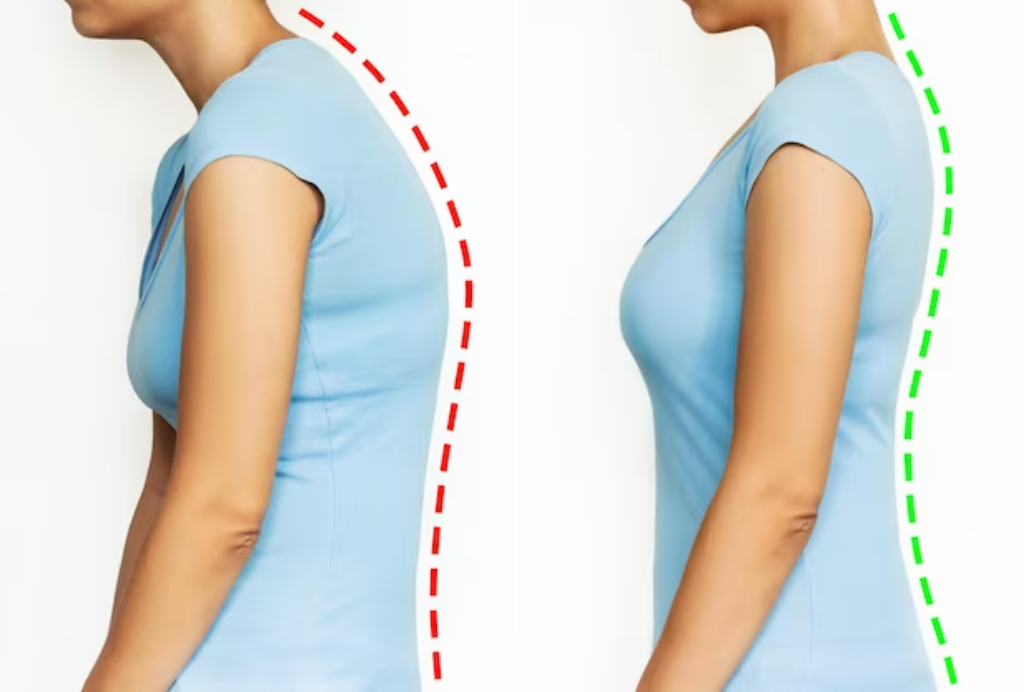
Common Posture Problems and What Causes Them
Poor posture rarely develops overnight. It is typically the result of habitual movement patterns, lifestyle factors, and muscle imbalances that build up over months or years. Understanding the most common postural problems can help you identify what might be happening in your own body.
Forward head posture is perhaps the most widespread issue seen in modern practice. Every inch your head moves forward from its balanced position over your shoulders adds significant weight-equivalent stress to your cervical spine. Given how much time most of us spend looking down at phones or leaning toward computer screens, this pattern is increasingly common across all age groups — including teenagers and young adults in the Lisle community.
Rounded shoulders often accompany forward head posture. When the chest muscles become tight and the upper back muscles weaken, the shoulders roll inward and forward. This changes the mechanics of the shoulder joint and can contribute to pain, reduced range of motion, and even issues like thoracic outlet syndrome.
Anterior pelvic tilt is a postural pattern where the front of the pelvis drops and the lower back arches excessively. This is commonly caused by prolonged sitting, tight hip flexors, and weak core and gluteal muscles. It places increased pressure on the lumbar spine and is a frequent contributor to lower back pain.
Swayback posture — where the hips shift forward and the upper body leans back — places uneven stress on the lumbar discs and hip joints. Like most postural problems, it tends to develop gradually through repetitive habits and muscle imbalances.
How Poor Posture Affects Your Spine and Nervous System
Your spine is designed with natural curves — a gentle inward curve at the neck (cervical lordosis), an outward curve at the mid-back (thoracic kyphosis), and another inward curve at the lower back (lumbar lordosis). These curves work together as a shock-absorption system and allow you to bear the load of daily activity efficiently. When posture becomes chronically poor, these natural curves can become exaggerated or flattened, which disrupts that finely tuned system.
One of the most important things to understand is the relationship between spinal alignment and the nervous system. Your spinal cord and nerve roots travel through and exit the spinal column at every vertebral level. When spinal segments are misaligned or under abnormal mechanical stress — as can happen with sustained poor posture — nerve function in those areas can be affected. This is one reason why poor posture is sometimes associated not just with local pain but with referred symptoms like tingling, numbness, or discomfort that seems unrelated to the spine.
The intervertebral discs are also vulnerable. These gel-like cushions between your vertebrae depend on healthy movement and alignment to stay nourished and resilient. Sustained compression from poor posture — particularly in a forward-flexed seated position — can contribute to disc stress and, over time, increase the risk of disc-related issues in the neck or lower back. This is why Dr. Paul Rieselman emphasizes that posture is truly a spinal health issue, not just a cosmetic one.
How Chiropractic Care Supports Better Posture
Chiropractic care is particularly well-suited to addressing posture-related concerns because it focuses directly on the spine, joints, and the musculoskeletal system as a whole. At Northstar Integrated Health & Physical Medicine Center in Lisle, IL, the approach to posture is individualized — because no two people’s bodies or habits are exactly the same.
A chiropractic evaluation typically begins with a thorough assessment of your posture, spinal alignment, and movement patterns. Dr. Paul Rieselman looks at how your body moves as a system, identifying areas of restriction, imbalance, or compensation that may be contributing to your postural habits or pain. This is important because posture problems are rarely isolated — a tight hip can affect the lower back, which can affect the mid-back, which can affect the neck. Everything is connected.
Chiropractic adjustments are used to restore proper motion and alignment to spinal joints that have become restricted or misaligned. This can help reduce the mechanical stress associated with poor posture and support your body’s natural ability to function more efficiently. Evidence from organizations like the National Center for Complementary and Integrative Health (NCCIH) indicates that spinal manipulation may be helpful for reducing musculoskeletal pain, including pain associated with postural strain.
In addition to adjustments, chiropractic care at Northstar Integrated Health & Physical Medicine Center often incorporates soft tissue work, rehabilitative exercises, and ergonomic guidance — all of which contribute to lasting postural improvement rather than temporary relief. The goal is always to address the root of the problem, not just manage symptoms.
Practical Tips for Maintaining Proper Posture Every Day
Understanding posture is one thing — actually changing your daily habits is another. Here are straightforward, evidence-informed strategies that Dr. Paul Rieselman and the team at Northstar Integrated Health & Physical Medicine Center recommend to patients looking to improve and maintain their posture over time.
Reposition yourself frequently. No posture, even a perfect one, should be held rigidly for hours on end. The human body is designed to move. If you work at a desk, make a conscious effort to shift positions or stand briefly at least once every 30 to 45 minutes. Movement encourages circulation, relieves muscular tension, and prevents the joint compression that comes with sustained static positioning.
Set up your workspace thoughtfully. Your monitor should be at or slightly below eye level so your head doesn’t need to tilt up or down. Your keyboard and mouse should allow your elbows to rest close to your body at roughly a 90-degree angle. If you use a laptop as your primary device, consider a separate keyboard and a laptop stand to raise the screen to a healthier height.
Strengthen your core intentionally. Your core — the deep muscles of your abdomen, back, and pelvis — acts as the foundation for your spinal alignment. Exercises like bird-dogs, dead bugs, and gentle planks can help build the kind of functional core strength that supports posture naturally, without constantly having to “think about it.”
Be mindful of your phone habits. Constantly looking down at a screen in your lap is one of the fastest ways to develop forward head posture. Try raising your phone closer to eye level when reading or scrolling, and take regular breaks from handheld screen time.
Pay attention to your sleeping position. A supportive mattress and a pillow that keeps your neck in a neutral alignment can make a meaningful difference. Sleeping on your back or side is generally preferable to sleeping on your stomach, which tends to strain the neck by forcing it into prolonged rotation.
When to See a Chiropractor About Your Posture
There’s no single threshold that determines when someone “needs” a chiropractor, but there are certainly signs that suggest professional evaluation would be worthwhile. If you’ve noticed persistent stiffness, aching, or pain in your neck, upper back, or lower back — especially after periods of sitting or inactivity — that’s a reasonable signal to seek care. The same applies if you find yourself fatigued after activities that shouldn’t be particularly tiring, or if you’ve noticed visible changes in your posture such as one shoulder sitting higher than the other or a head that tends to sit forward.
It’s also worth noting some situations that require medical evaluation beyond chiropractic care. If postural issues are accompanied by significant numbness or tingling down an arm or leg, sudden severe pain, loss of bladder or bowel control, or pain following trauma, those symptoms should be evaluated by a medical professional promptly. Chiropractors like Dr. Paul Rieselman are trained to recognize when referral is necessary and will never hesitate to recommend additional care when it’s in a patient’s best interest.
For the vast majority of people dealing with posture-related discomfort, chiropractic care is a safe, non-invasive starting point that can produce meaningful results without the need for drugs or surgery.
Posture Mistakes vs. Corrective Strategies
|
Common Posture Mistake |
Why It’s Problematic |
Corrective Strategy |
|---|---|---|
|
Forward head posture (head jutting forward) |
Increases stress on the cervical spine; strains neck muscles |
Chin tucks, monitor at eye level, limit phone looking-down time |
|
Rounded shoulders while seated |
Tightens chest muscles; weakens upper back; affects shoulder mechanics |
Chest stretches, seated row exercises, ergonomic chair setup |
|
Excessive lumbar arch (anterior pelvic tilt) |
Compresses lumbar joints; strains low back muscles |
Hip flexor stretching, core strengthening, conscious pelvic alignment |
|
Crossing legs while seated |
Creates pelvic imbalance; can contribute to hip and SI joint issues |
Keep feet flat on the floor, hips at a neutral, even level |
|
Stomach sleeping |
Forces neck into prolonged rotation; stresses cervical and lumbar spine |
Transition to side or back sleeping with supportive pillow |

Myths vs. Facts About Proper Posture
Myth: Good posture means sitting perfectly straight all the time.
Fact: Holding any single position rigidly for prolonged periods — even a technically “correct” one — creates muscular fatigue and joint compression. Good posture is dynamic, not static. The real goal is to move regularly and develop the muscular support to maintain comfortable alignment without effort.
Myth: Posture problems only affect older adults.
Fact: Posture-related issues are increasingly common in younger populations, including children, teenagers, and adults in their twenties and thirties. The widespread use of smartphones and laptops has accelerated this trend significantly. Age is not a prerequisite for developing poor posture habits.
Myth: If posture hasn’t caused pain yet, it’s not a concern.
Fact: Postural stress accumulates gradually. Many people don’t notice pain or dysfunction until the problem has been developing for years. Addressing postural habits proactively — before symptoms appear — is one of the most effective forms of musculoskeletal prevention available.
Myth: Chiropractic care is only for people already in pain.
Fact: Many people visit chiropractors for postural assessment, performance optimization, and preventive wellness care — not just for pain relief. Chiropractic care can play a valuable role in identifying imbalances and supporting better function before problems become painful.
Myth: Core strength alone is enough to fix posture.
Fact: Core strength is certainly important, but posture is influenced by a range of factors including joint mobility, spinal alignment, muscle flexibility, movement habits, and ergonomic environments. A well-rounded approach — ideally guided by a qualified professional — addresses all of these elements together.
Final Thoughts from Our Team in Lisle, IL
Proper posture is one of the most underappreciated pillars of long-term health. It influences how your spine ages, how your muscles function, how much energy you have, and how comfortable you feel in your own body every single day. The good news is that posture is something you can genuinely improve at any age, with the right guidance and consistent effort.
Here at Northstar Integrated Health & Physical Medicine Center in Lisle, IL, Dr. Paul Rieselman and our care team are committed to helping members of our community understand and take ownership of their spinal health. We believe that education is the foundation of lasting wellness — and we hope this guide has given you a clearer picture of why proper posture matters and how you can start making meaningful changes today.
If you have questions about your posture, are dealing with discomfort that you suspect may be posture-related, or simply want a professional assessment of where you stand, we welcome you to reach out. Northstar Integrated Health & Physical Medicine Center is here to support the Lisle community with compassionate, evidence-informed chiropractic and integrative care.
Frequently Asked Questions
How long does it take to correct poor posture?
The timeline varies depending on how long posture habits have been established, the individual’s overall muscle balance, and how consistently corrective strategies are applied. Some people notice improvement within a few weeks, while more entrenched postural patterns may take several months of consistent effort and professional guidance to address meaningfully.
Can chiropractic adjustments directly improve posture?
Chiropractic adjustments can help restore proper motion to restricted spinal joints, which supports more natural alignment and movement. When combined with rehabilitative exercises and ergonomic changes, adjustments can be a meaningful part of a comprehensive posture improvement plan. Evidence suggests spinal manipulation is effective for related musculoskeletal discomfort.
Is it possible to have good posture and still have back pain?
Yes. While poor posture is a common contributor to back pain, it is not the only factor. Disc issues, joint degeneration, muscle dysfunction, and other variables can cause back pain independent of posture. A thorough chiropractic evaluation can help identify the specific contributing factors in your individual case.
What is the best sitting posture for someone who works at a desk all day?
A generally recommended seated posture involves feet flat on the floor, knees at roughly a 90-degree angle, hips level, lower back gently supported, shoulders relaxed and not rounded forward, and a monitor at eye level so the neck remains in a neutral position. Regular movement breaks are equally important — no seated posture should be held without interruption for long periods.
Are posture-correcting braces or devices helpful?
Posture braces can provide short-term reminders and support in specific situations, but they are generally not recommended as a long-term solution on their own. If worn too consistently, they can actually reduce the activation of the muscles you want to strengthen. Most conservative care specialists recommend addressing the underlying muscle imbalances rather than relying primarily on external supports.
How do I know if my posture is actually a problem worth addressing?
A professional posture and spinal assessment is the most reliable way to evaluate your individual alignment. Common signs that posture may be contributing to problems include recurring neck or back pain, tension headaches, uneven shoulder or hip height, and discomfort that worsens with prolonged sitting or standing. If any of these sound familiar, an evaluation at Northstar Integrated Health & Physical Medicine Center in Lisle, IL is a worthwhile next step.
TL;DR — Key Takeaways
-
Proper posture means balanced alignment of your head, spine, hips, and limbs — it’s not about rigidity, but about efficient, sustainable positioning that reduces strain on your body.
-
Poor posture develops gradually through habitual patterns, muscle imbalances, and lifestyle factors like prolonged desk work and phone use, and can contribute to pain, fatigue, and spinal stress over time.
-
Your spine’s natural curves and the nervous system that runs through it are directly impacted by chronic postural problems — making posture a genuine spinal health concern, not just an aesthetic one.
-
Chiropractic care, including spinal adjustments, rehabilitative exercises, and ergonomic guidance, can be an effective part of a posture improvement plan for many people.
-
Simple daily habits — moving regularly, setting up your workspace ergonomically, strengthening your core, and being mindful of your phone and sleep positions — can make a meaningful difference in your posture over time.