
Text Neck: What It Is, Why It Matters, and How Chiropractic Care in Lisle Can Help
At Northstar Integrated Health & Physical Medicine Center here in Lisle, we see a growing number of patients—teens and adults alike—who spend hours each day looking down at their phones, tablets, and laptops. If your neck feels stiff, achy, or tired by the end of the day, you’re not alone. In this article, we’ll explain what “text neck” is, why it matters for the health of your spine, and the simple, practical steps you can take to protect your neck. We’ll also share how chiropractic care fits into a holistic plan to relieve pain, restore mobility, and support better posture for long-term comfort.
What is “text neck”? Text neck is a common term for neck pain and stiffness related to frequently looking down at phones and other screens. The posture often involves a forward head position and rounded shoulders, which can strain the joints, discs, and muscles of the cervical spine. It’s not a formal diagnosis, but a helpful way to describe a very real pattern of neck stress.
Table of Contents
What Is Text Neck?
Text neck describes neck strain and discomfort that occur when the head is held forward and down for extended periods while using a smartphone, tablet, or laptop. Even though it’s a casual term, the pattern behind it is well recognized: the more time we spend in a flexed, head-forward posture, the more stress we place on the muscles, ligaments, joints, and discs in the neck.
Over time, this can lead to tightness in the back of the neck, weakness in the deep stabilizing muscles, and a general tendency toward rounded shoulders and forward head posture. The result is a stiff, tired neck that may ache during or after screen use.
Why It Matters for Your Neck and Spine
Your head is designed to sit over your shoulders, with your ears roughly aligned above them. When your head drifts forward and down, the muscles of the neck and upper back must work harder to support it. That extra effort can lead to fatigue, trigger points, and irritation of the joints in the cervical spine.
Left unaddressed, this pattern may contribute to recurring neck pain, headaches, and shoulder tension. For some, it can also reduce comfortable motion, making everyday activities—from driving to working at a desk—less pleasant. While phones aren’t going away, the good news is that small posture changes and the right care plan can make a meaningful difference.
The Biomechanics (Explained Simply)
Think of your head like a bowling ball balanced on a stack of small, flexible blocks (your neck vertebrae). When the ball sits right on top, everything stacks nicely and the muscles work efficiently. When the ball tips forward, those small blocks and the supporting muscles are under more load. The farther forward the tip, the more load.
In prolonged looking-down positions, the back of the neck works overtime while the deep neck stabilizers in the front may switch off. Over weeks and months, this can set up an imbalance: tight, overworked muscles behind the neck and across the top of the shoulders, and weaker stabilizers in the front. That imbalance is a major reason text neck can linger.
Common Signs and Symptoms
People with text neck often report a dull ache across the base of the skull and upper neck, stiffness turning the head, or soreness after long screen sessions. Some notice headaches that start in the neck and wrap around to the forehead or behind the eyes. Others describe mid-back tightness or a pulling sensation between the shoulder blades when they’ve been looking down for a while.
Symptoms may come and go, and they tend to flare after heavy smartphone use, studying, or laptop work—especially if you’re working from a couch, bed, or car. If nerves are irritated, you might notice tingling around the shoulder or into the arm. That’s a sign to get a professional evaluation.
How It Affects Kids, Teens, and Adults
Here in Lisle, we care for students, commuters, and professionals who all spend time on screens—Benedictine University students studying on laptops, families streaming shows at night, and commuters catching up on messages along the BNSF line. Age doesn’t protect you; it simply changes the pattern.
Kids and teens may adapt quickly but can develop bad habits early. Adults may feel more stiffness and fatigue. Desk-based professionals often have a mix of phone and laptop posture challenges. The underlying principle is the same: duration and repeated positions shape how your neck feels.
Common Mistakes People Make
Two mistakes show up again and again. The first is treating posture like a single “perfect” position to hold all day. In reality, your body prefers variety—small, frequent changes beat a single rigid posture. The second is relying on willpower alone. Without a setup that brings the screen up and your shoulders back, the neck will creep forward, no matter how motivated you are.
Other missteps include stretching only the tight areas without strengthening weak stabilizers, ignoring early warning signs (like end-of-day stiffness), and working on phones or laptops from couches and beds where slouched positions are hard to avoid.
How Chiropractic Care Fits In at Northstar Integrated Health
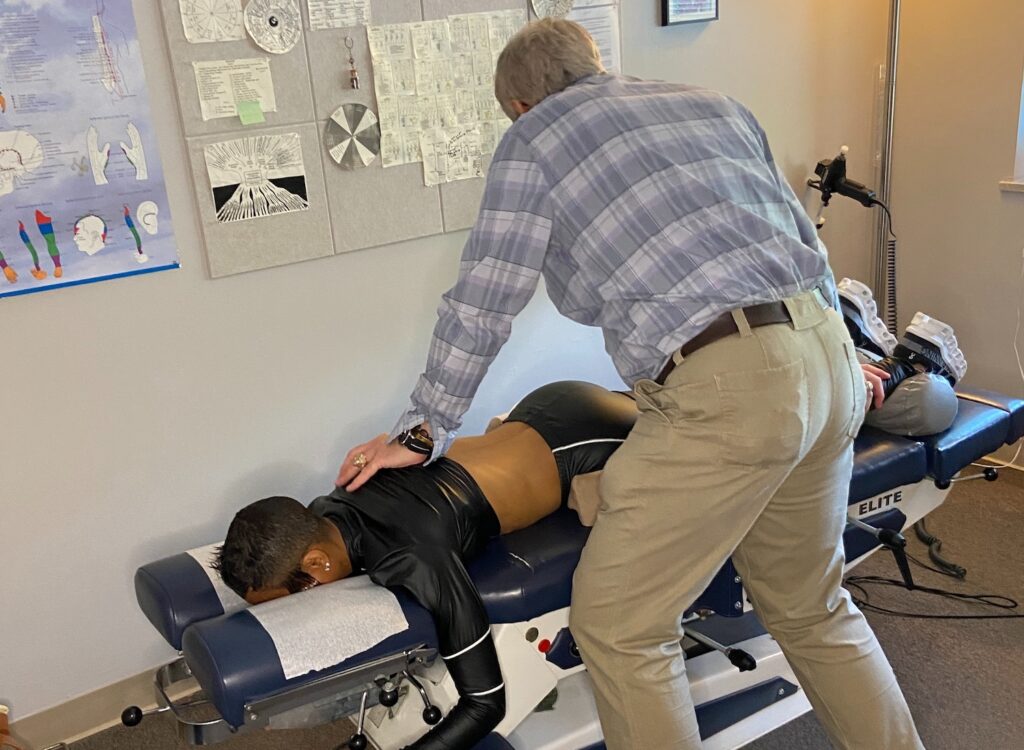
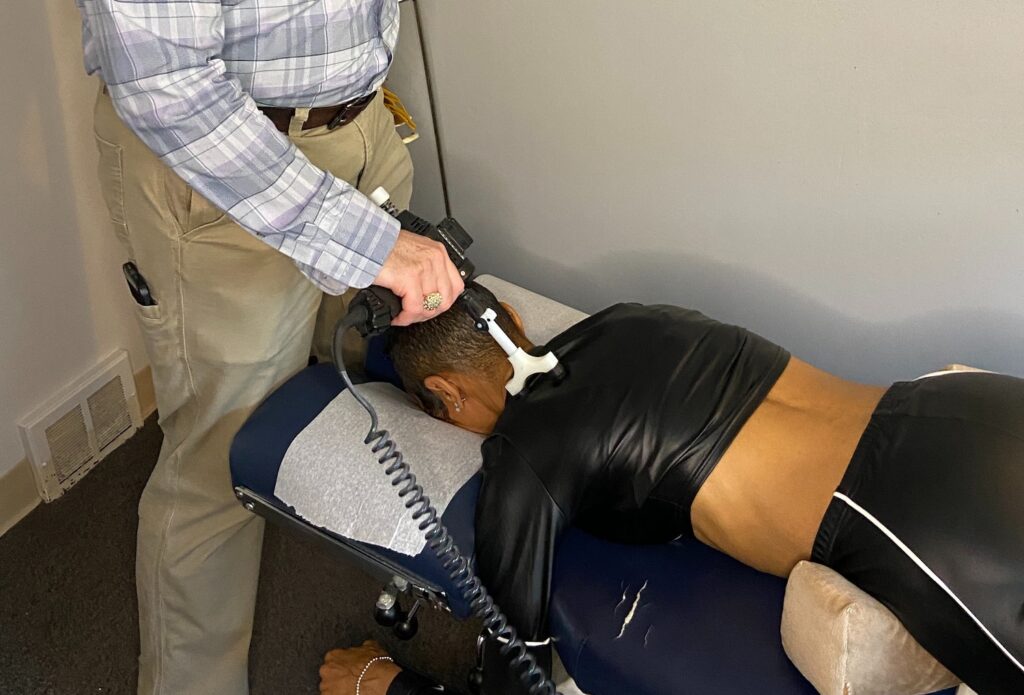
Chiropractic care focuses on restoring healthy joint motion, improving alignment, and reducing muscle tension—key pieces of the puzzle for text neck. At Northstar Integrated Health & Physical Medicine Center, we start with a thorough history and exam. We want to understand your daily habits, work setup, and how your neck moves and feels.
Depending on your findings and goals, your chiropractor may recommend a personalized plan that can include:
- Spinal adjustments and mobilization: Gentle, targeted techniques to improve cervical and thoracic spine motion and ease joint irritation. For many people with mechanical neck pain, spinal manipulation or mobilization may offer short-term relief and functional improvement as part of a broader care plan. Research suggests manual therapies can help some patients reduce pain and improve motion when combined with exercise and education.
- Soft-tissue therapies: Focused work on tight muscles and fascia in the neck, upper back, and chest to reduce guarding and improve flexibility. This may include myofascial release or trigger point techniques.
- Rehabilitative exercise: Specific exercises to strengthen deep neck flexors, lower trapezius, and other postural stabilizers, along with mobility work for stiff joints. Practice is key—the more consistently you do them, the better the results.
- Posture and ergonomic coaching: We’ll help you tailor your phone and desk setups so your environment supports good habits. Small changes—like bringing the screen up and elbows in—can dramatically reduce end-of-day strain.
- Integrated, team-based care: Because we’re an integrated clinic, we coordinate care with our physical medicine and rehabilitation team, and may incorporate therapeutic exercise or massage therapy when appropriate. Our goal is a holistic approach that supports your spine, muscles, and daily routines.
Evidence notes that manual therapy combined with exercise and education tends to be more effective than any one approach alone for many people with neck pain. For context, you can explore patient-friendly resources from the National Center for Complementary and Integrative Health and systematic reviews on manipulation/mobilization for neck pain from reputable journals if you’re curious about the research background.
Selected resources:
- National Center for Complementary and Integrative Health (NCCIH) – Spinal Manipulation overview
- Cochrane and other systematic reviews on manual therapy for neck pain discussing potential short-term benefits for some patients and emphasizing individualized care
Practical Posture and Phone Use Tips
You don’t need a perfect posture—just better habits, more often. Try these simple changes at home, at work, and on the go. Pick two or three to start this week.
- Bring the screen up: Hold your phone at chest or eye height; if sitting, prop elbows on pillows or armrests.
- Soften your gaze: If you wear progressives or bifocals, adjust your screen height so you’re not tilting your head up or down to see clearly.
- Set movement reminders: Every 20–30 minutes, take a 20–30 second microbreak to roll your shoulders, look level or slightly up, and gently rotate your neck.
- Support your upper back: Sit back so your mid-back is supported; stack ears over shoulders and gently tuck your chin.
- Use voice-to-text and headphones: Keeps the phone lower without the head tilt and reduces shoulder shrugging during long calls.
- Choose solid surfaces: Limit working from couches and beds; use a table and a chair with back support when you can.
- Balance stretching with strengthening: Pair chest and upper trapezius stretches with strengthening of deep neck flexors and shoulder blade stabilizers.
- Carry smart: Switch shoulders if you use a bag, or choose a backpack with both straps to reduce asymmetrical strain.
- Wind down wisely: Before bed, stretch gently and avoid long, head-down scrolling sessions to let the neck settle.
When to See a Chiropractor in Lisle
If you’ve tried simple adjustments for a couple of weeks and your neck still feels stiff, sore, or limited, a professional evaluation can help you find the real drivers. Consider scheduling with a chiropractor if:
- You have recurring neck pain at the end of the day, stiffness turning your head to drive, or frequent tension headaches that start in your neck.
- You notice your shoulders rounding forward and your head drifting out over your chest, despite posture reminders.
- You’re unsure which exercises are right for you or how to set up your workstation or phone habits in a sustainable way.
- Your pain improves temporarily but keeps coming back.
At Northstar Integrated Health in Lisle, we’ll assess motion, strength, and daily habits to tailor a plan that fits your life—whether you’re a student, a busy parent, or working long hours at a computer.
When to Seek Immediate or Medical Care
While text neck is typically a musculoskeletal issue that responds well to conservative care, certain symptoms require prompt medical attention. Seek urgent medical evaluation if you experience sudden, severe neck pain after trauma; new or worsening weakness in an arm or hand; loss of coordination; changes in bowel or bladder control; or severe headache accompanied by neurological symptoms (such as slurred speech, facial droop, or vision changes). Also contact your medical provider if you have neck pain with fever, unexplained weight loss, or a history of cancer.
Chiropractic is not emergency care. If we find signs that suggest you need imaging or a medical referral, we’ll coordinate that for your safety.
Myths vs. Facts About Text Neck
It’s easy to feel overwhelmed by posture advice online. Here are a few clarifications to keep things practical and reassuring.
| Myth | Fact |
|---|---|
| “Text neck means I’ve permanently damaged my spine.” | Most cases are related to posture and muscle imbalance. With the right habits and care, many people improve significantly. |
| “If I just sit perfectly straight all day, I’ll be fine.” | Your body prefers variety. Gentle movement and frequent position changes are more helpful than one “perfect” posture. |
| “Stretching alone will fix it.” | Stretching helps, but strengthening deep neck and shoulder blade stabilizers is just as important for lasting results. |
| “Phones are the only problem.” | Laptops, tablets, long driving, and stress all play a role. Small changes across your day add up. |
| “Chiropractic works the same for everyone.” | Care is individualized. Many people benefit from a combination of manual therapy, exercise, and education tailored to their needs. |
Final Thoughts for Our Lisle Community
Text neck is a modern name for an old idea: when we hold one posture too long, our necks protest. The solution isn’t perfection—it’s awareness, better setups, and consistent, gentle movement. If you live or work in Lisle or nearby communities like Naperville and Downers Grove and you’re noticing neck tension more often, we’re here to help you get back to comfortable, confident movement.
At Northstar Integrated Health & Physical Medicine Center, our team blends chiropractic care with rehabilitative exercise and practical coaching. If you have questions about your posture, workspace, or neck pain, we’re happy to take a look and guide you with clear, simple steps.
FAQs
How do I know if my neck pain is from phone use?
If your neck aches after scrolling, reading, or texting—especially when you’ve been looking down—and feels better when you raise your screen or take breaks, phone posture is likely a contributor.
Can chiropractic help with text neck?
Many people with mechanical neck pain find relief with a combination of spinal manipulation or mobilization, soft-tissue work, and targeted exercise. Results vary; a personalized assessment is key.
How long does it take to feel better?
Some people notice improvement within a few sessions when they also change daily habits. More longstanding issues may take several weeks of consistent care and home exercises.
Is texting posture harmful to kids?
Prolonged head-down posture can contribute to muscle imbalance in kids and teens. Encouraging screen breaks, higher device position, and activity helps support healthy habits.
Do I need imaging for neck pain?
Most neck pain related to posture doesn’t require imaging at first. Your provider will recommend imaging only if red flags or specific clinical findings suggest it’s needed.
What pillow is best for text neck?
Choose a pillow that keeps your neck neutral—neither propped up too high nor sagging too low. Side sleepers often do well with a medium-height, supportive pillow; back sleepers with a thinner, contoured option.
TL;DR
- Text neck is neck strain from frequent head-down screen use; it’s common and usually improves with simple changes.
- Raising screens, taking movement breaks, and balancing stretching with strengthening go a long way.
- Chiropractic care may help by improving joint motion, reducing muscle tension, and guiding smart exercises and ergonomics.
- See a chiropractor if symptoms persist or keep returning; seek medical care urgently for red flags like trauma, weakness, or neurological symptoms.
- Small, consistent habits create lasting comfort—perfect posture isn’t required.